How Does a Home Energy Storage System Work?
A home energy storage system is not simply a battery connected to solar panels. It is a complete energy management solution that combines solar panels
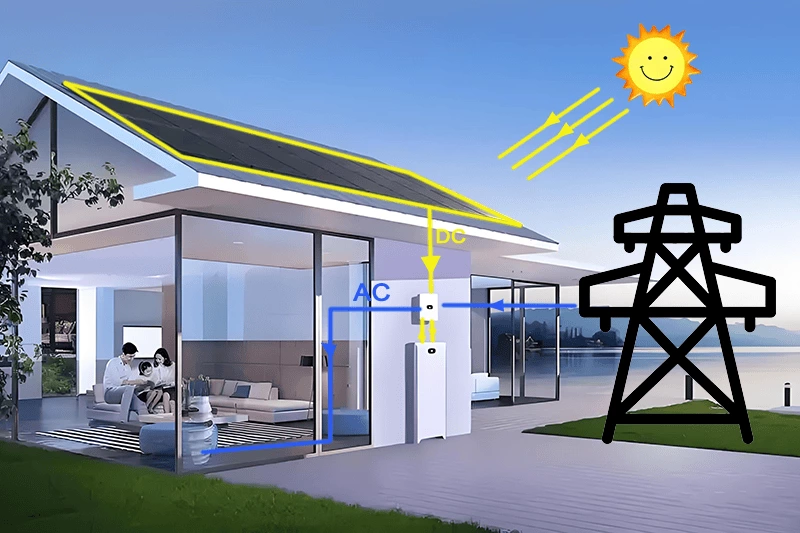
A home energy storage system is not simply a battery connected to solar panels. It is a complete energy management solution that combines solar panels, hybrid inverter, lithium battery, and intelligent control system to improve solar energy utilization and provide reliable backup power.
From an engineer’s perspective, the working principle is straightforward:
During the daytime:
Solar panels generate electricity → Power the home first → Store excess energy in the battery
At night or during power outages:
Battery supplies electricity → Hybrid inverter converts power → Home appliances continue running
A properly designed system needs to balance solar generation capacity, battery capacity, inverter power, and household electricity consumption.
Example: How Solar Energy Is Distributed
Assume:
Solar generation:
5kW
Current household consumption:
2kW
The hybrid inverter automatically manages the energy flow:
5kW Solar Power
├── 2kW → Household Loads
└── 3kW → Battery Charging
The unused solar energy is stored in the lithium battery instead of being wasted.
This is one of the main reasons homeowners install battery storage systems — to increase solar self-consumption and reduce dependence on grid electricity.
Night Operation: Battery Supplies Power After Sunset
When solar generation stops at night, the battery becomes the main energy source.
The process is:
LiFePO4 Battery→DC Power Output→Hybrid Inverter→AC Power→Home Appliances
For example, a household may have the following evening loads:
| Appliance | Power Consumption |
| LED Lighting | 200W |
| Refrigerator | 300W |
| TV | 100W |
| Air Conditioner | 1500W |
Total load:Around 2kW
With a 10kWh battery
The theoretical runtime:
10kWh ÷ 2kW = 5 hours
However, real operating time depends on:
- Battery depth of discharge (DoD)
- Inverter conversion efficiency
- Ambient temperature
- Actual load fluctuations
In practical applications, a 10kWh battery may provide approximately 4–5 hours of backup power under a 2kW load.
What Happens on Cloudy Days or When the Battery Runs Low?
A reliable home energy storage system automatically switches between different energy sources.
The priority is usually:
Solar Power→Battery Storage→Grid Electricity
When solar production decreases:
- Solar power supplies the home first
- Battery provides additional power
- Grid electricity supports the system when battery energy is insufficient
Users normally do not need to manually operate the system.
The hybrid inverter continuously monitors:
- Solar generation
- Battery SOC (State of Charge)
- Household load demand
- Grid conditions
and automatically selects the most efficient power source.
Backup Power Function During Grid Failure
For regions with unstable electricity supply, backup capability is one of the most important reasons to install a home battery system.
Most modern hybrid inverters support:
- EPS (Emergency Power Supply)
- Backup Output
When the grid fails:Grid Power OFF⇒LiFePO4 Battery⇒Hybrid Inverter⇒Essential Loads Powered
The system can continue supplying power to:
✔ Refrigerator
✔ WiFi router
✔ Lighting
✔ Computer
✔ Security system
However, whether large appliances can operate depends on the inverter output power.
For example:
A 5kW inverter can support many household devices, but high-power equipment such as:
- Central air conditioning
- Electric water heaters
- Large heating systems
requires careful system sizing.
How Energy Flows Inside a Home Storage System
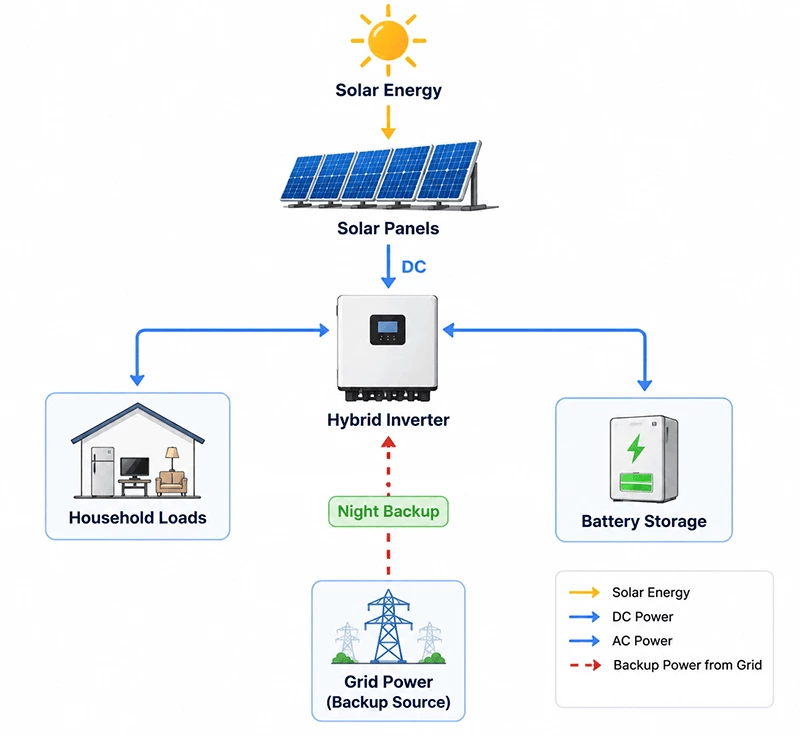
The hybrid inverter acts as the control center of the entire system.
Common Operating Modes of Home Energy Storage Systems
Mode 1: Self-Consumption
The most common application.
Daytime:
Solar → Home Load
Solar Excess → Battery Charging
Night:
Battery → Home Load
The goal is to maximize solar energy usage and reduce electricity bills.
Mode 2: Peak Shaving / Time-of-Use Energy Management
Suitable for areas with different electricity prices.
Low electricity price:
Grid → Battery Charging
High electricity price:
Battery → Home Supply
This helps homeowners reduce electricity costs.
Mode 3: Off-Grid Operation
For locations without reliable grid access:
Solar Panels
↓
Battery Storage
↓
Hybrid Inverter
↓
Home Loads
Common applications include:
- Remote houses
- Rural areas
- Islands
- Outdoor residential projects
How to Choose the Right Home Energy Storage System?
From our experience in battery and energy storage manufacturing, system matching is more important than simply choosing a larger battery.
Before purchasing, customers should consider:
Household Daily Electricity Consumption
A family using 10kWh/day has completely different requirements from a home using 30kWh/day.
Solar PV Capacity
More solar panels mean:
- Faster battery charging
- Higher energy independence
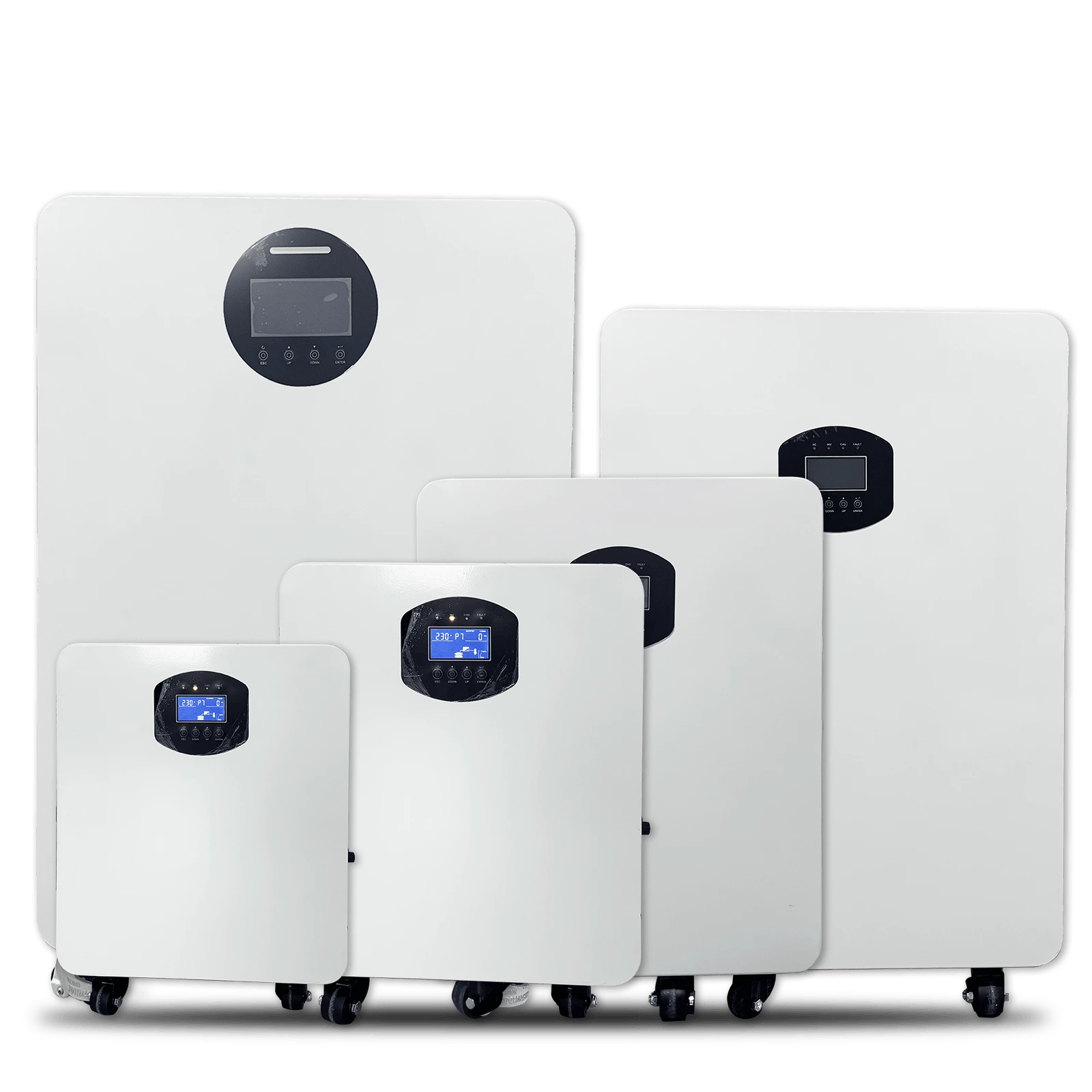
Battery Capacity
Common residential battery sizes:
- 5kWh
- 10kWh
- 15kWh
- 20kWh+
The right capacity depends on:
- Night consumption
- Backup requirements
- Electricity price structure
Inverter Power Rating
The inverter determines how many appliances can operate simultaneously.
For example:
- 3kW inverter → Small household loads
- 5kW inverter → Medium-sized homes
- 8kW+ inverter → Larger residential applications
Why More Families Are Installing Solar Battery Storage Systems
The demand for home energy storage continues to grow because homeowners want:
✔ Lower electricity bills
✔ Higher energy independence
✔ Reliable backup during power outages
✔ Better utilization of solar energy
✔ Cleaner and smarter energy solutions
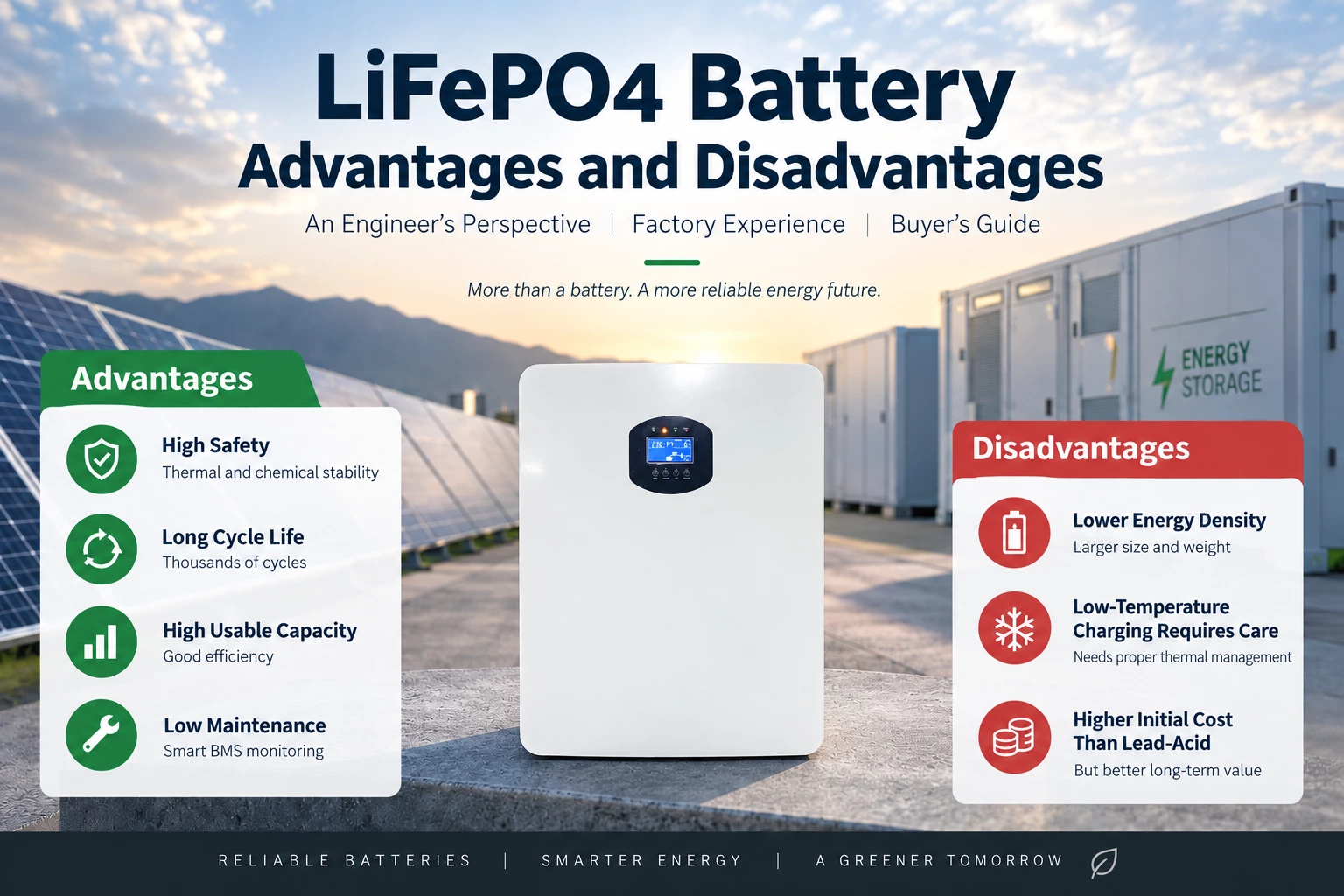
Most modern residential systems use LiFePO4 lithium batteries because they offer:
- High safety performance
- Long cycle life
- Stable operation
- Better suitability for daily charging and discharging
As a professional energy storage manufacturer, we believe a reliable home storage system is not only about battery capacity — it is about proper system design, quality components, and long-term stable operation.