LiFePO4 Battery Advantages and Disadvantages: Buyer’s Guide
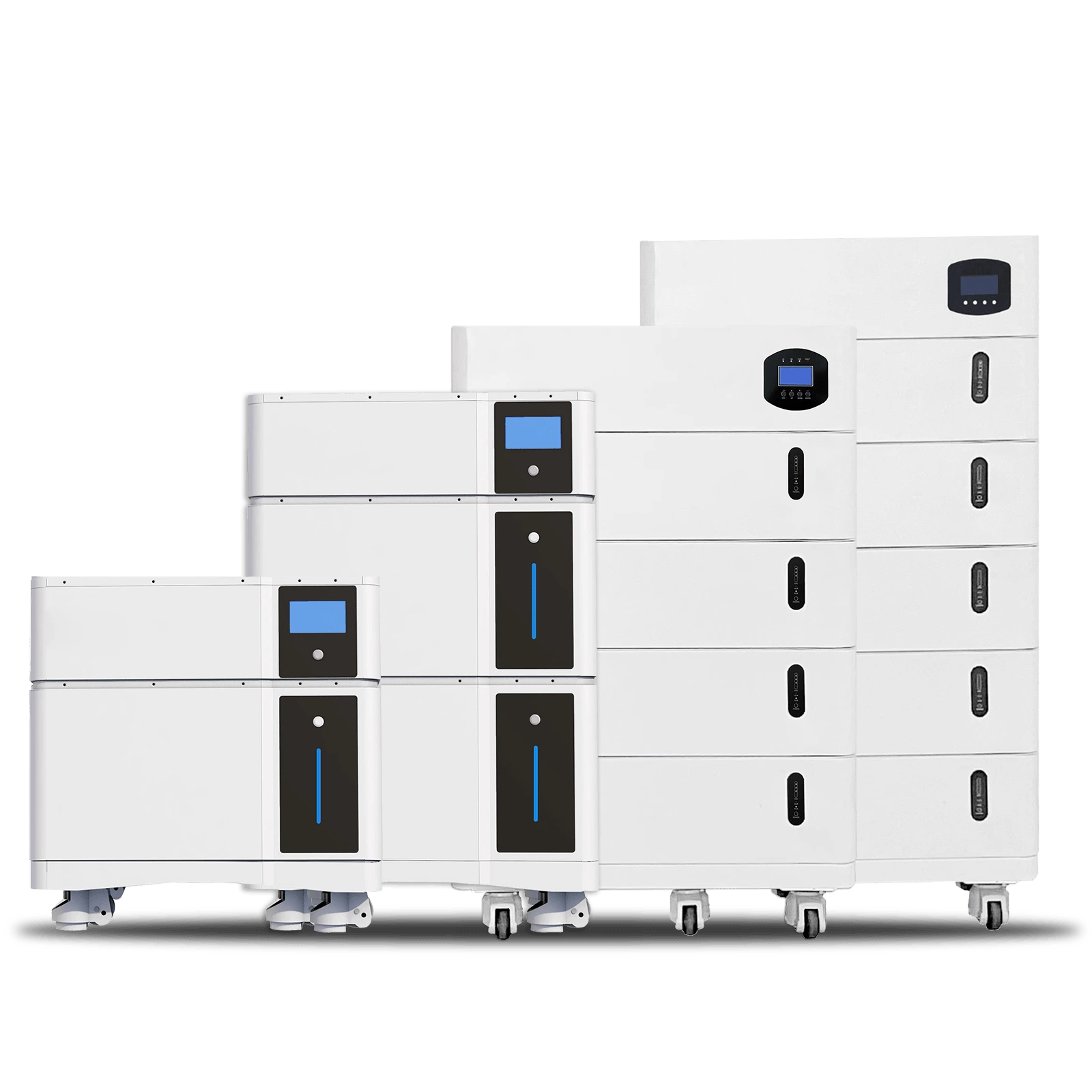
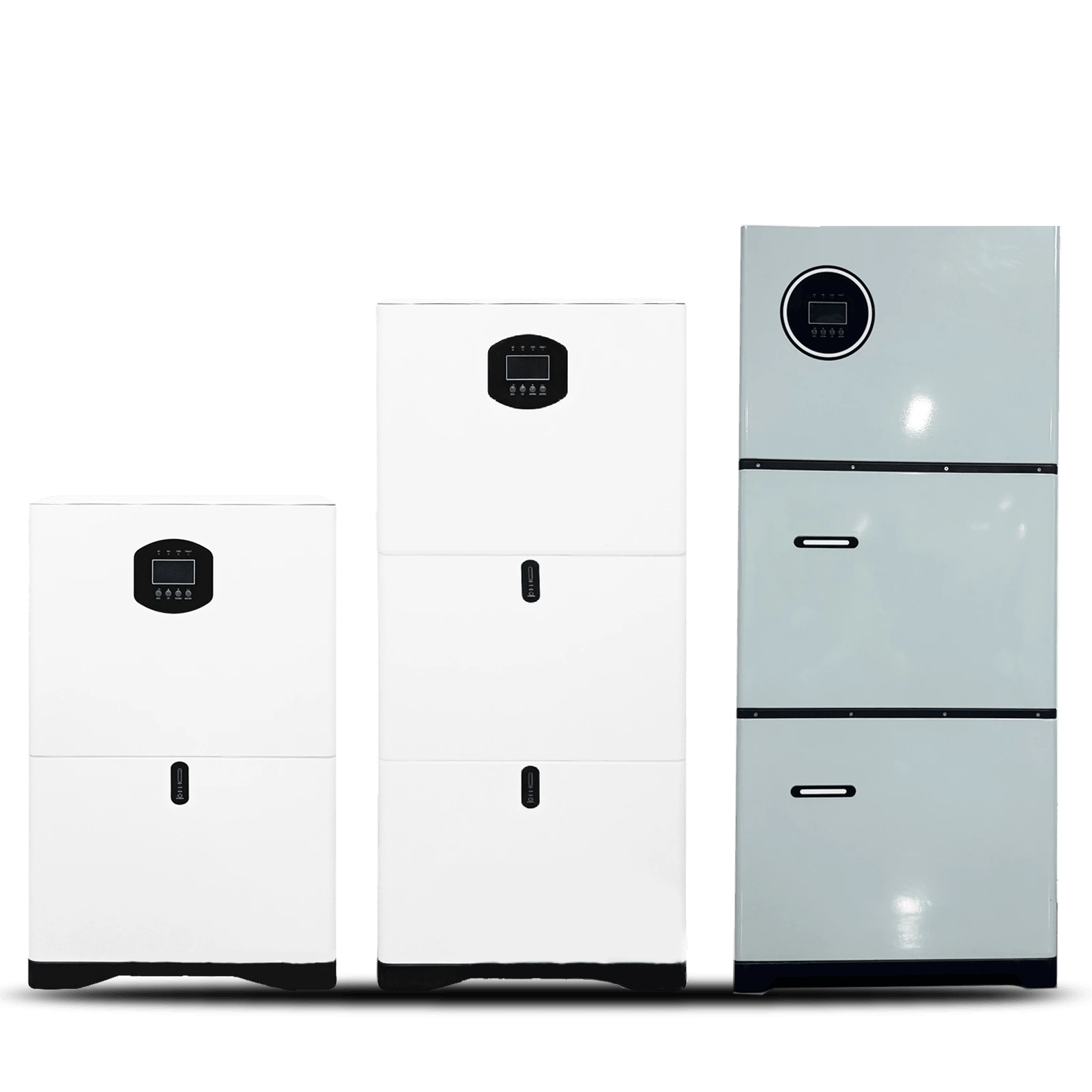
LiFePO4 (lithium iron phosphate or LFP) batteries are widely used in residential solar storage, commercial and industrial energy storage systems (C&I ESS), telecom backup power and containerized BESS.
LiFePO4 (lithium iron phosphate or LFP) batteries are widely used in residential solar storage, commercial and industrial energy storage systems (C&I ESS), telecom backup power and containerized BESS.
But is LiFePO4 always the best battery technology?
From an engineer’s perspective, LiFePO4 offers excellent safety, long cycle life and good lifetime value, but it also has limitations in energy density, low-temperature charging and initial cost.
More importantly, battery chemistry alone does not determine system quality. Based on our experience with battery PACK assembly and energy storage integration, cell consistency, BMS design and thermal management can be just as important.
What Are the Main Advantages of LiFePO4 Batteries?
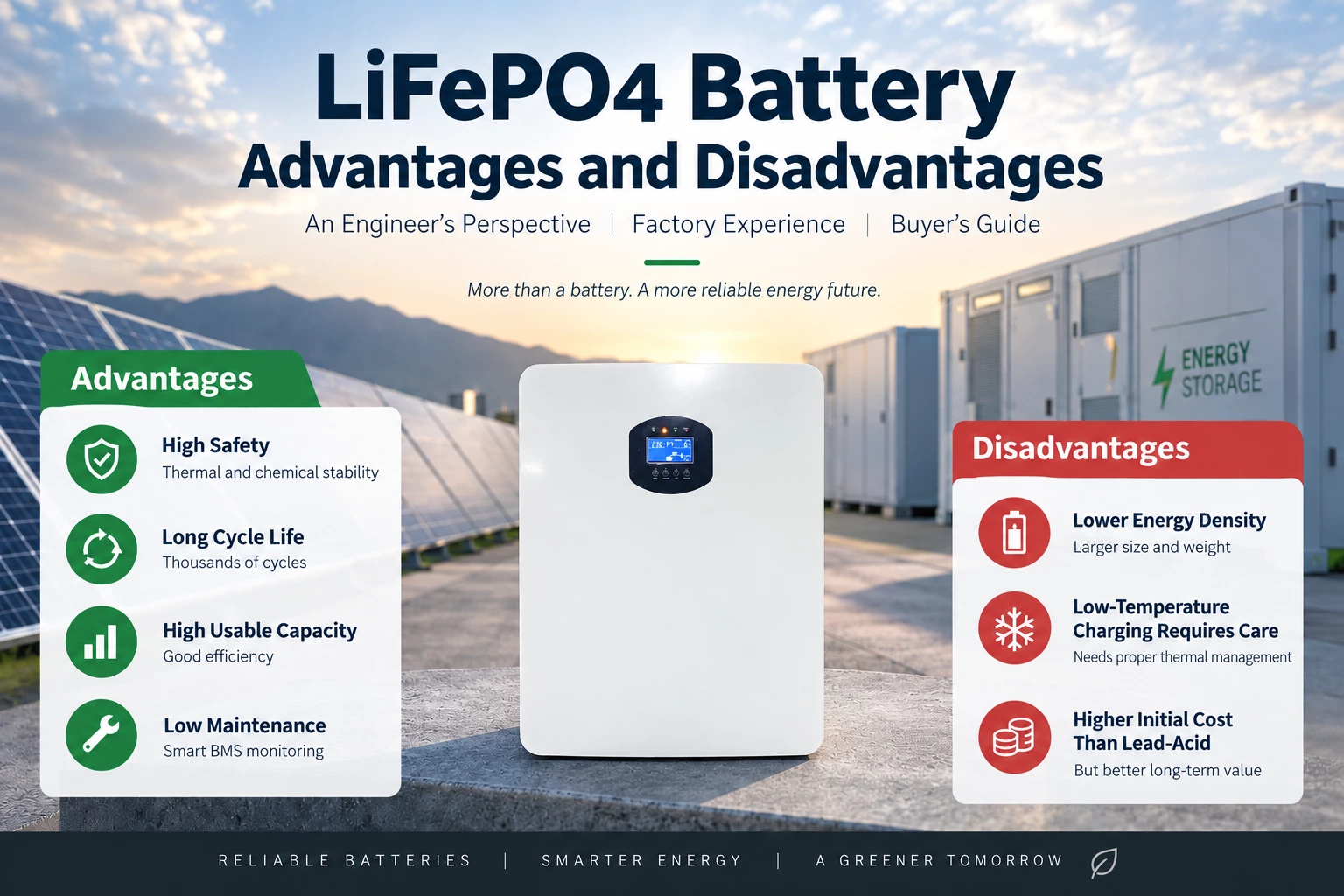
1. High Safety and Thermal Stability
Safety is one of the main reasons engineers choose LiFePO4 for stationary energy storage.
Compared with some nickel-rich lithium-ion chemistries, LFP has strong thermal and chemical stability, making it well suited for residential ESS, commercial buildings, factories and large BESS projects.
However, “safer chemistry” does not mean “risk-free.”
A reliable energy storage system still requires proper BMS protection, electrical protection, temperature monitoring and thermal management.
2. Long Cycle Life
High-quality LiFePO4 cells can provide thousands of charge and discharge cycles under appropriate operating conditions.
But buyers should be careful with claims such as “6000+ cycles.”
As engineers, we would ask:
6000 cycles at what DOD, C-rate, temperature and end-of-life capacity?
Cycle life depends on operating temperature, depth of discharge, charge/discharge rate, SOC range and cell consistency. Therefore, the test conditions behind the cycle number are often more important than the number itself.
3. High Usable Capacity and Efficiency
LiFePO4 batteries generally allow deeper usable discharge than traditional lead-acid batteries and provide good charge/discharge efficiency.
For energy storage projects, engineers therefore look beyond nominal capacity:
Nominal Energy → DOD → Usable Energy → System Efficiency → Actual Energy Delivered
This makes LFP particularly suitable for solar self-consumption, peak shaving, time-of-use applications and backup power.
4. Low Maintenance
Unlike traditional lead-acid batteries, LiFePO4 systems require relatively little routine maintenance.
Modern BMS systems continuously monitor parameters such as cell voltage, current, temperature, SOC and alarm conditions.
For larger systems, the BMS can also communicate with the PCS and EMS, allowing centralized monitoring and control.
What Are the Disadvantages of LiFePO4 Batteries?
1. Lower Energy Density
LiFePO4 generally has lower energy density than lithium chemistries such as NMC.
For portable devices and applications where weight and space are critical, this can be a disadvantage.
For stationary energy storage, however, engineers often prioritize safety, cycle life and reliability over maximum energy density.
2. Low-Temperature Charging Requires Care
LiFePO4 batteries require careful charging control at low temperatures.
For projects in cold climates, engineers should consider low-temperature charging protection, insulation, battery heating and thermal management.
For an outdoor ESS, asking only whether the cabinet is “outdoor rated” is not enough.
A better engineering question is:
How does the system manage battery temperature during winter charging?
3. Higher Initial Cost Than Lead-Acid
LiFePO4 batteries usually cost more initially than lead-acid batteries.
However, purchase price alone does not represent the real project cost.
Engineers and project developers should evaluate Total Cost of Ownership (TCO), including usable capacity, cycle life, efficiency, maintenance and replacement costs.
For frequently cycled energy storage applications, LFP can provide better long-term economics despite the higher initial investment.
Factory Experience: Why Cell and BMS Quality Matter
One of the biggest lessons from battery PACK production is that not all LiFePO4 batteries with the same specifications perform the same way.
Two batteries may both be labeled:
but their actual performance can differ because of cell grade, internal resistance, cell matching, BMS quality and PACK assembly.
Cell consistency is particularly important.
If one weak cell reaches its voltage limit earlier than the others, the BMS may stop charging or discharging the entire pack.
In practice:
A battery pack can eventually be limited by its weakest cells.
This is why cell sorting and matching during production are important.
The BMS is equally critical. It should provide protection against overcharge, over-discharge, over current, abnormal temperature and other operating risks while maintaining reliable communication with the inverter, PCS or EMS.
Good cells with poor BMS integration still do not make a good energy storage system.
Buyer’s Guide: What Should You Check Before Buying?
If you are an installer, distributor, EPC contractor or project developer, avoid choosing a LiFePO4 battery based only on $/kWh.
Before purchasing, check:
Cells: brand, model, grade and cell-matching process
Cycle life: DOD, C-rate, temperature and end-of-life criteria
BMS: protection functions, balancing and communication protocols
Compatibility: inverter or PCS communication
Thermal management: air cooling, liquid cooling or heating if required
Warranty: years, capacity retention and operating conditions
Certification: applicable IEC, UL, CE and transportation requirements
System integration: PCS, EMS, grid voltage, PV, diesel generator and backup requirements
For larger C&I ESS projects, the battery should never be evaluated as an isolated component. The complete system architecture matters.
Conclusion: Is LiFePO4 a Good Choice for Energy Storage?
For most stationary energy storage applications, LiFePO4 provides an excellent balance of safety, cycle life, usable capacity and long-term cost.
Its main limitations are lower energy density, low-temperature charging requirements and higher upfront cost compared with lead-acid batteries.
From our engineering and factory experience, however, the most important lesson is simple:
Battery chemistry is only the starting point.
A reliable ESS depends on the complete engineering chain:
Cell Quality → Cell Matching → BMS → PACK Design → Thermal Management → PCS/EMS Integration
For professional buyers, the right question is therefore not simply:
“How much does this battery cost per kWh?”
It should be:
“How reliable will this battery system be over its expected operating life?”