Battery Factory Quality Control Process: From Raw Materials to Final Inspection
Quality control is essential to manufacturing safe, reliable, and high-performance energy storage batteries. From incoming battery cells to completed
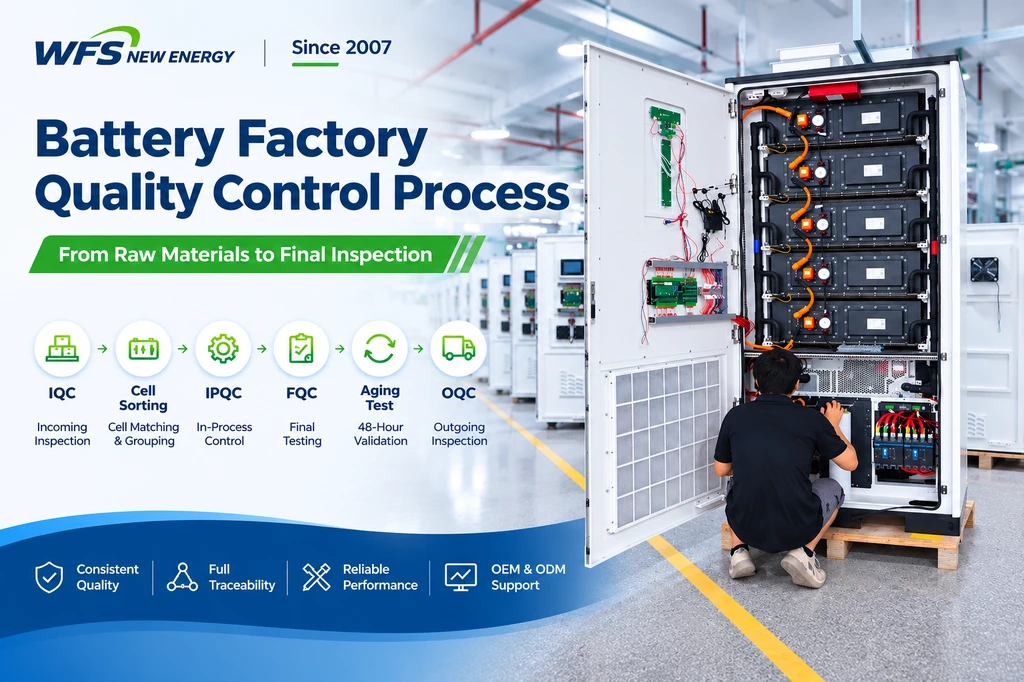
At WFS New Energy, battery quality control covers six stages, from incoming materials to shipment: IQC, cell sorting, IPQC, FQC, aging testing, and OQC.
01. Incoming Quality Control (IQC)
Preventing defective materials from entering production
We inspect LiFePO4 cells, BMS, PCS, busbars, wiring, enclosures, insulation, and cooling components.
-
Documentation: Verify specifications, batch numbers, COA, and applicable compliance documents.
-
Appearance: Check for damage, deformation, leakage, corrosion, and packaging defects.
-
Electrical testing: Measure cell open-circuit voltage (OCV), internal resistance (IR), and relevant self-discharge characteristics.
-
Material testing: Check dimensions, insulation, flame-retardant properties, and mechanical strength where applicable.
Nonconforming materials are isolated for corrective action.
02. Battery Cell Sorting and Matching
Improving battery pack consistency
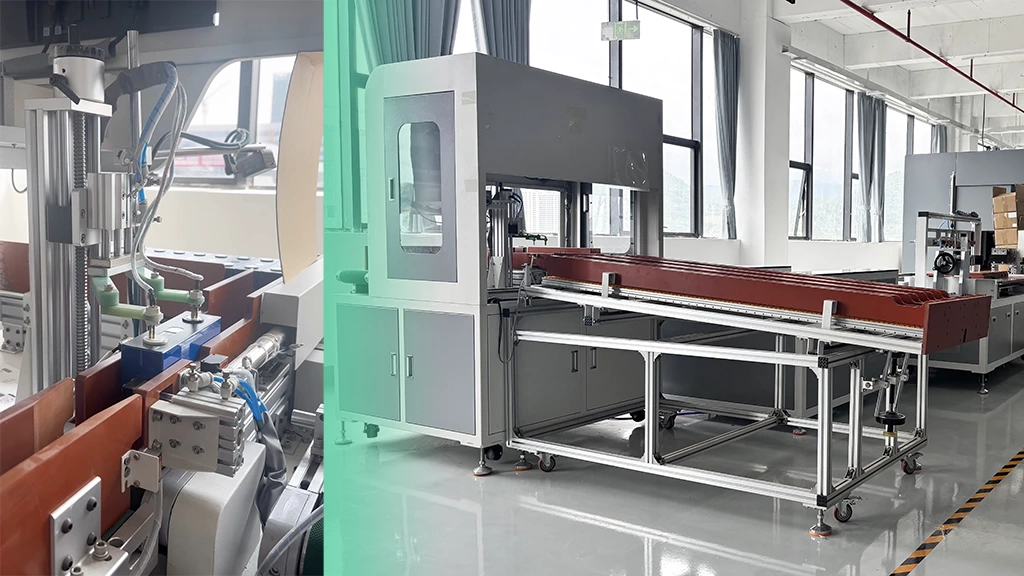
Cells are grouped by voltage, internal resistance, and capacity, with visual checks for swelling, leakage, and damage.
Cell matching helps minimize imbalance and supports stable battery performance.
03. In-Process Quality Control (IPQC)
Monitoring critical production operations
IPQC includes first-piece and routine inspections during assembly:
-
Welding: Inspect laser weld quality, connection resistance, and joint strength.
-
Wiring: Check terminal crimping, wire sequence, insulation, and connections.
-
BMS assembly: Verify voltage sensing wires, temperature sensors, and communication wiring.
-
Mechanical assembly: Check positioning and fastening torque.
-
Liquid cooling: Inspect seals, pipe connections, and leakage performance where applicable.
Defective products are isolated for corrective action.
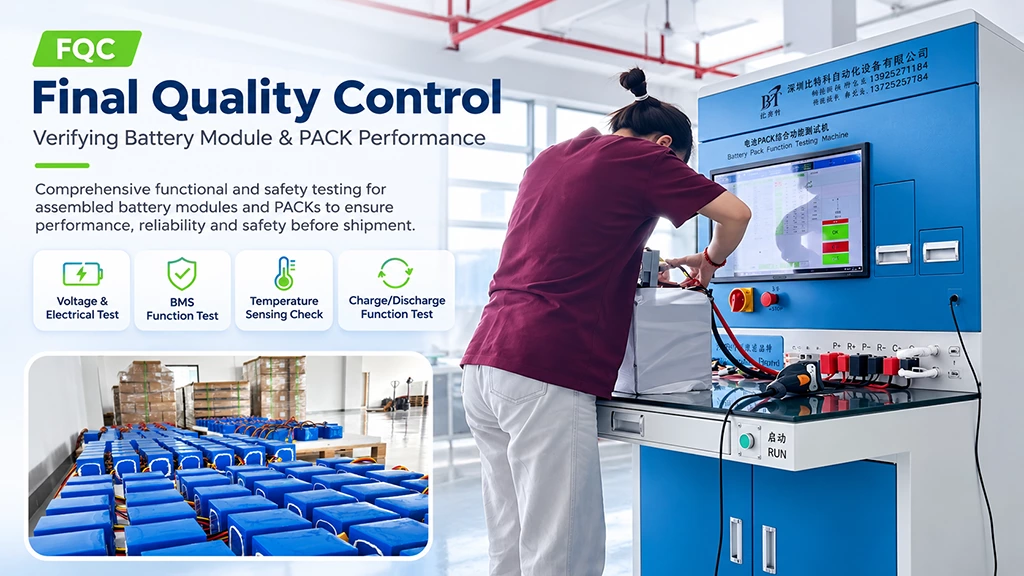
04. Final Quality Control (FQC)
Verifying assembled battery modules and PACKs
Modules and PACKs undergo these inspections:
-
Inspect housings, fasteners, labels, and assembly quality.
-
Measure pack voltage, individual cell voltage differences, and electrical characteristics.
-
Perform applicable insulation resistance and dielectric withstand (Hi-Pot) tests.
-
Verify BMS voltage readings, temperature sensing, and communication.
-
Test cooling circuit leakage for relevant liquid-cooled products.
-
Link serial numbers to production batches and inspection records for traceability.
Failures require corrective action and retesting.
 05. Aging Test
Evaluating stability through charging and discharging
Aging tests detect potential defects. Initial checks cover wiring, insulation, and BMS communication.
The process includes:
-
Charging and discharging: Monitor voltage, current, capacity, energy, and operating curves.
-
Cell consistency: Track voltage differences and identify abnormal imbalance.
-
Temperature monitoring: Observe cells, modules, and critical electrical connections.
-
BMS monitoring: Check SOC, balancing, communication stability, and alarm records.
-
Data analysis: Review test results and abnormal events against acceptance criteria.
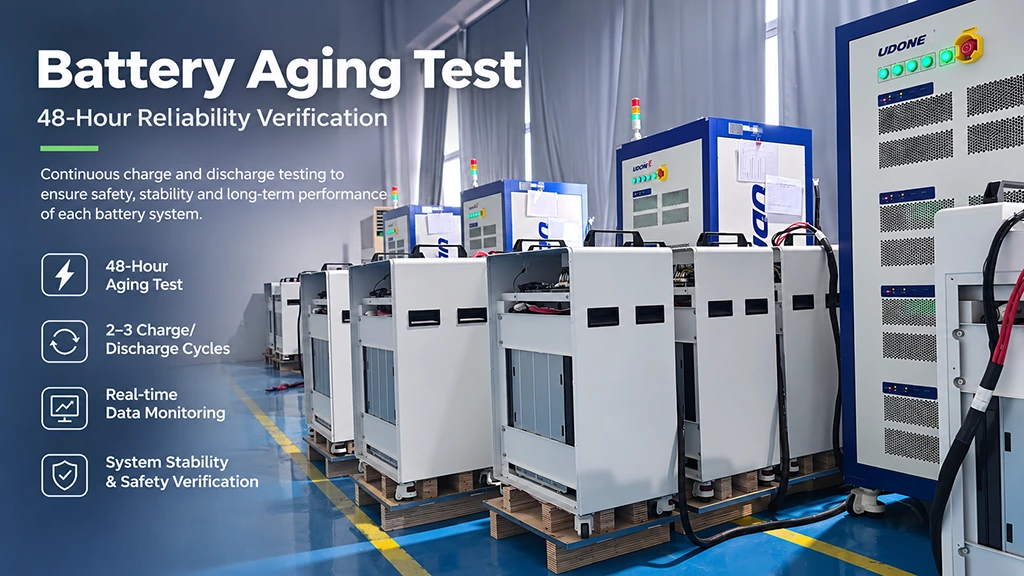 At WFS New Energy, a 48-hour aging test procedure can be applied, including approximately 2–3 charge-discharge cycles, depending on product specifications.
For liquid-cooled C&I systems, checks also cover PCS/BMS/EMS communication, cooling pumps, temperature control, and alarms.
06. Outgoing Quality Control (OQC)
Final inspection before packaging and shipment
OQC is the last quality checkpoint for completed battery packs and energy storage cabinets.
-
Appearance: Inspect cabinet doors, labels, grounding, wiring, and fasteners.
-
Electrical safety: Verify applicable voltage, insulation, and withstand test results.
-
System functions: Check BMS–PCS communication and relevant protection functions.
-
Performance: Review charging and discharging results against specifications.
-
Safety alarms: Verify applicable smoke, temperature, door, and leakage alerts.
-
Documentation: Check inspection reports, serial numbers, and traceability records.
-
Packaging: Confirm protective materials, moisture protection, and secure packaging.
Products that do not meet inspection requirements must be corrected and rechecked before shipment.
Why Quality Control Matters for B2B Buyers
For distributors, EPCs, and system integrators, consistent quality helps reduce installation and after-sales risks.
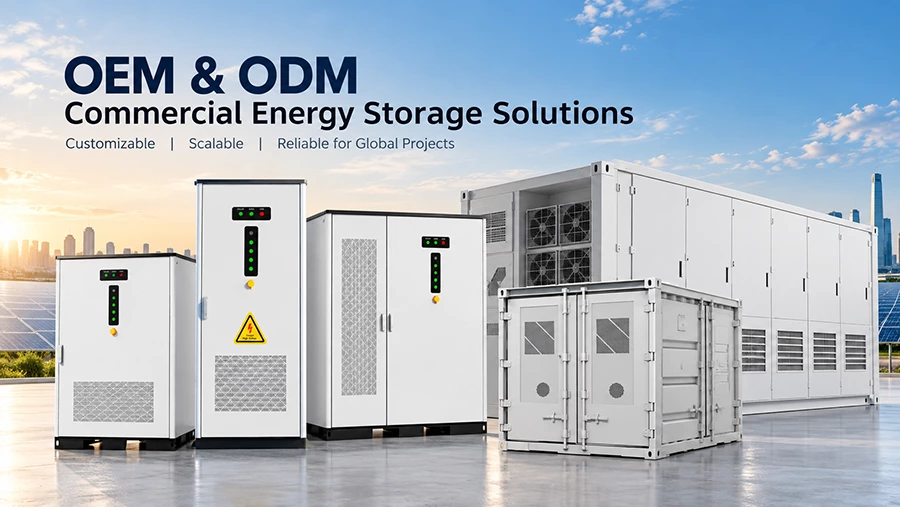
It also supports batch consistency, traceability, and OEM/ODM customization.
Partner with WFS New Energy
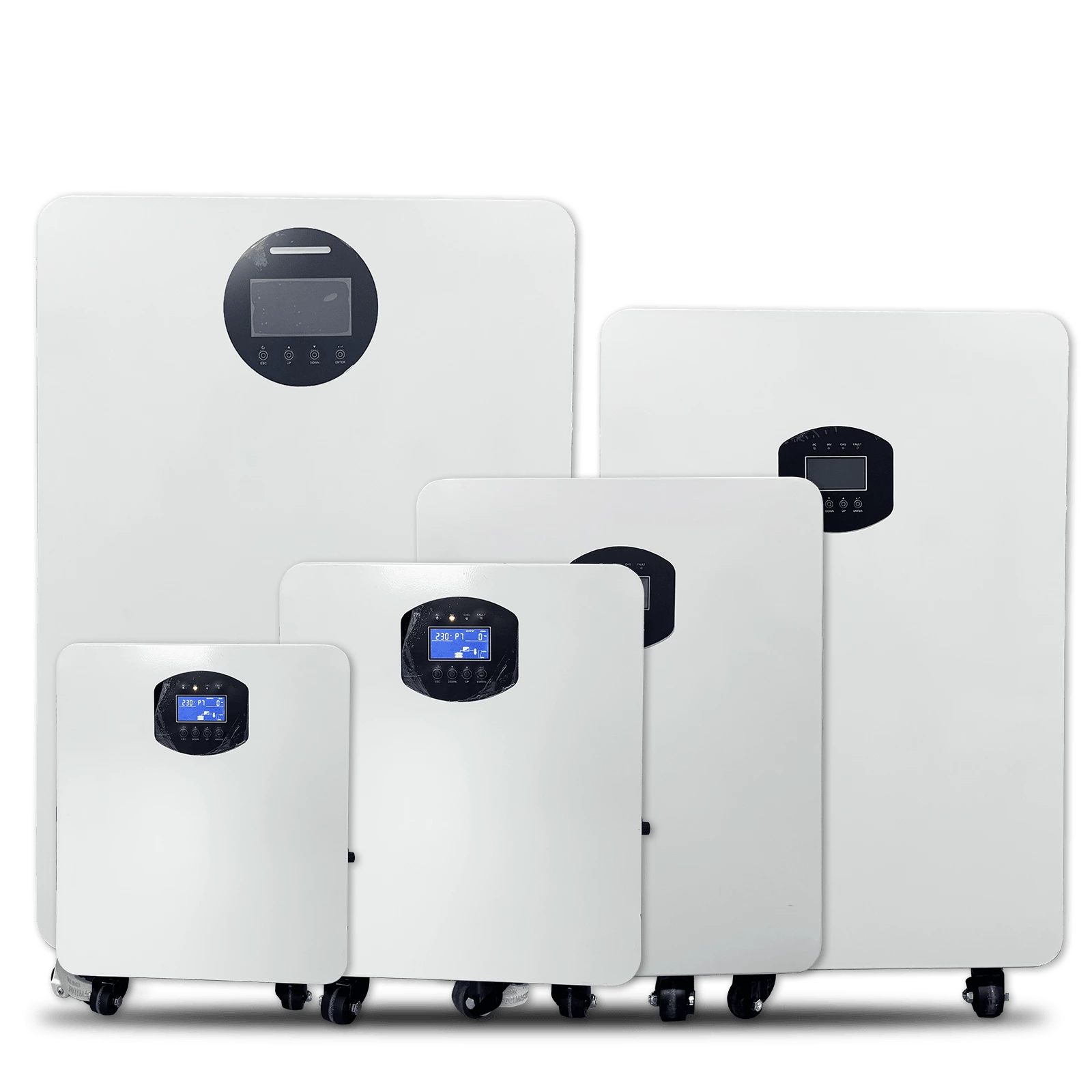
Since 2007, WFS New Energy has provided residential and commercial energy storage solutions, including LiFePO4 battery packs, all-in-one systems, and C&I battery storage equipment.
Our manufacturing and testing procedures support OEM/ODM projects with different capacities, configurations, and application requirements.
Contact WFS New Energy to discuss product specifications and customization needs.